Puzzles for Kids - Full game
- 4.0
- Rating
- 10.00K
- Installs
- $4.99
- Price

 Analysis by App-foxy
When I tried Puzzles for Kids - Full game, the feature that shaped my whole impression was simple but important: every animal puzzle is already unlocked, and the game contains no advertisements. That changes the experience more than the cheerful animal theme might suggest. A child can move from one picture to another without an advert interrupting the activity, while an adult does not need to manage individual purchases or explain why one puzzle is unavailable.
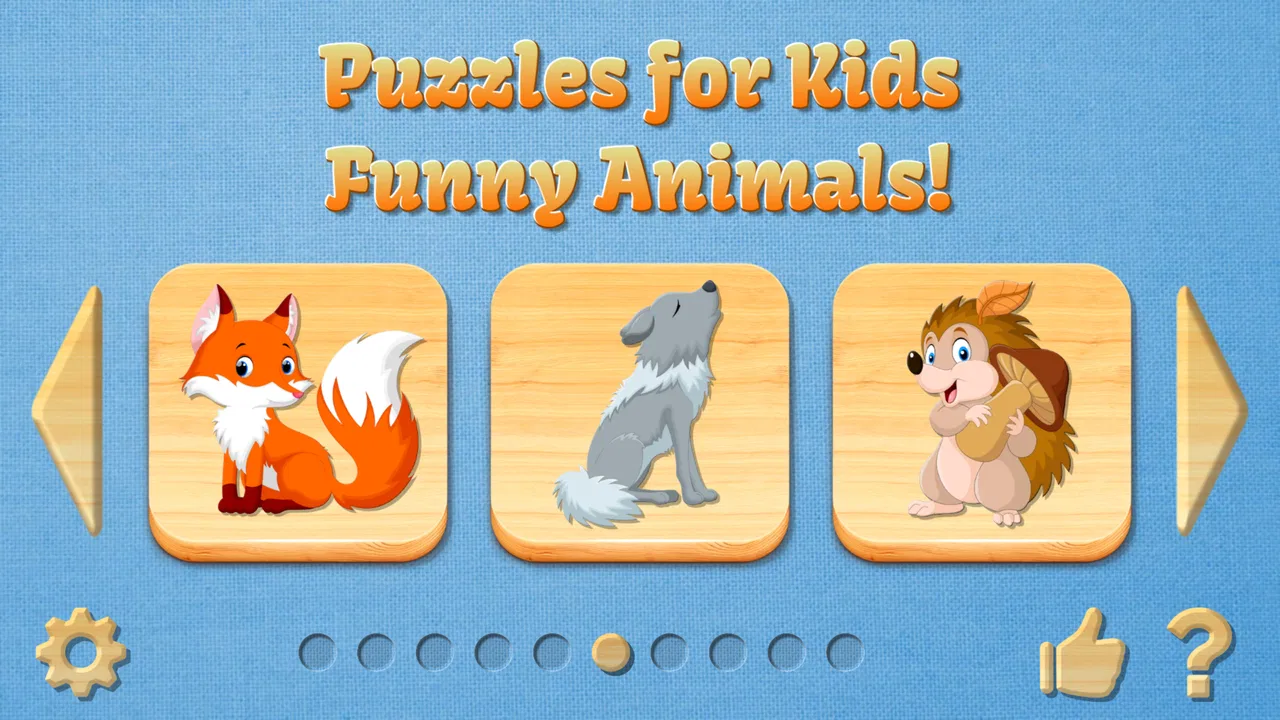
This is an educational game from CLEVERBIT, aimed at young children and rated Everyone. It is available for $4.99, which places it firmly in the paid-app category rather than the try-first, purchase-later model common among children’s games. Its store summary presents it as a funny animal puzzle experience, but in everyday use I found its real appeal to be the calm, contained format: open the game, choose an animal picture, and let the child concentrate on fitting the pieces together.
Why the unlocked, ad-free design matters
The all-unlocked approach is the central capability here. Instead of treating the first few puzzles as a preview, the game gives access to its complete animal-focused content from the start. I like this arrangement for younger players because it removes a layer of negotiation. There is no need to decide whether a child has earned the next picture, whether an adult should approve a purchase, or whether a locked option will cause frustration.
You May Also Like

 Blood Strike: 2.5 Anniversary
Blood Strike’s Loadouts Turn Every Drop Into a Tactical Gamble
A close look at Blood Strike’s custom loadouts: how fast access to signature weapons reshapes its battle royale rhythm, rewards preparation, and narrows the gap between fights.

 Pandora - Music & Podcasts
Pandora’s Music Is Easy to Start, but Harder to Recover
Pandora’s strength is its low-effort path from a seed to a station. Its weak spot is how much confidence it asks you to place in connection, setup, and quiet recovery.

 8 Ball Pool
 Is Built on Rivalries, Rematches, and Routine
A close look at the rivalries, rematches, shared routines, and unanswered safety questions that turn a quick pool match into a persistent mobile community.

 Samsung Music
’s Quiet Strength Is Playing What You Already Own
Its reach comes less from spectacle than from dependable access to a personal library. That simplicity is both the app’s strongest retention engine and its ceiling.

 AccuWeather: Weather Radar
AccuWeather Review: A Quick, Clear Forecast for Everyday Decisions
For everyday plans, the best forecast is the one you can understand quickly. AccuWeather makes rain timing, radar, and local conditions easy to act on, with a few trade-offs.

 Hill Climb Racing
Why Hill Climb Racing Still Turns Crashes Into One More Run
A tiny car, a bumpy hill and one more upgrade: Hill Climb Racing keeps resurfacing because its simple chaos makes every near-miss feel personal.
More From Our News Desk
View All News


The absence of advertising is equally meaningful. In a children’s puzzle game, an advert is not merely a visual interruption. It can pull attention away from the task, invite an accidental tap, or introduce something that has nothing to do with the child’s activity. Here, the play session stays focused on the puzzle itself. The strongest benefit is uninterrupted concentration, not simply the lack of banners.
That design also makes the game easier to use during small gaps in the day. I can imagine opening it while waiting for an appointment, during a quiet moment at home, or when a child needs a short activity before bedtime. Because the content is not divided into a complicated progression, the adult supervising can hand over the device and let the child begin without much explanation.
There is a practical trade-off, though. A fully unlocked collection can remove the sense of discovery that some children enjoy in games with gradual rewards. If your child is motivated by unlocking levels, collecting badges, or following a long adventure, this is a much quieter experience. Its reward is completing the picture, not building a larger game profile.
What the child actually does
The basic activity is assembling animal pictures from puzzle pieces. That sounds straightforward, and it is, which is part of the point. The game does not ask a young player to read long instructions or remember complex rules. The child can learn through touch, visual matching, and repeated attempts. For early learners, that low barrier is more useful than a crowded interface filled with menus and objectives.
As I used it, I paid attention to how the unlocked content affected the rhythm of play. A child who finishes one animal can move directly to another rather than reaching a stopping point. This makes the game suitable for a short session, but it also allows a longer period of independent exploration if the child remains interested. The adult can choose when to end the activity instead of the game forcing a pause through a locked screen or a commercial break.
The animal theme gives parents and caregivers an easy way to extend the activity beyond the screen. After completing a picture, I would use the animal as a prompt: ask what sound it makes, where it might live, what color the child noticed, or whether the child has seen one in a book or at a zoo. The game itself remains a puzzle, but the pictures can become starting points for vocabulary and conversation.
This is where I see the educational value most clearly. I would not treat it as a complete early-learning curriculum, and it does not replace books, physical puzzles, drawing, or play with an adult. Instead, it works as a focused visual exercise that can support recognition, attention, and hand-eye coordination while giving a child a pleasant reason to practice.
How I would use it with a child
For a first session, I would sit beside the child rather than immediately leaving them alone with the device. I would let them try the pieces before offering help, then describe what they are seeing instead of solving the puzzle for them. Phrases such as “look at the edge” or “which piece has the same part of the animal?” encourage observation without turning the activity into a test.
Once the child understands the interaction, the game becomes more suitable for independent play. The no-advertising setup helps here because I do not have to watch for an unexpected commercial or worry that a tap will take the child away from the puzzle. Even so, I would still keep sessions purposeful. Unlimited access to unlocked pictures does not mean every child will benefit from playing for a long stretch.
A useful routine is to choose one or two animals, complete them, and then talk about the pictures away from the screen. This prevents the game from becoming mindless tapping and turns the unlocked collection into a flexible teaching aid. It also helps a child who tends to rush: the goal becomes noticing the image, not merely finishing as quickly as possible.
For siblings or children at different ability levels, I would use the game in turns. A younger child can work on matching and placement, while an older child can describe the animal or help ask questions without taking over. The app is not designed around a formal multiplayer activity, so shared use depends on the adult setting the pace and making the conversation part of the experience.
The best everyday scenario
The clearest use case for me is a short, supervised waiting period. Imagine a child sitting in a quiet waiting room with a phone or tablet. A physical puzzle may be inconvenient to carry, and a video can make the child passive. This game offers a middle option: a contained activity that asks the child to look, choose, and complete something. Since all the animal puzzles are open, the child can continue after finishing one without needing an adult to intervene.
It also fits well into a calm transition at home. After returning from school or before beginning a quieter routine, one completed puzzle can provide a change of pace. I would avoid presenting it as a reward that must be earned every time, because that can make the device more important than the activity. Used occasionally, it works better as one choice among books, toys, and offline puzzles.
Travel is another reasonable setting, particularly when an adult wants an activity that does not depend on an internet connection being available at that moment. I am not treating that as a promise about connectivity requirements; the more certain advantage is that the game’s content is already open and does not rely on advertising interruptions. For travel, I would test the game on the intended device beforehand and prepare the child for taking turns if more than one child is present.
At bedtime, I would be more cautious. The quiet puzzle format is less stimulating than many action games, but it is still screen time. If a child becomes excited by completing every available picture, the full unlocked collection can work against a calm ending. In that situation, I would choose a single puzzle and put the device away rather than allowing the child to continue indefinitely.
Where it differs from common alternatives
Compared with free children’s puzzle apps, this game’s clearest distinction is the paid, ad-free structure. Free alternatives may be attractive when a parent wants to test a concept without spending money, but they often use locked content, promotional prompts, or advertising to support the app. Here, the upfront price buys a simpler relationship with the game: install it, open it, and use the animal puzzles without those interruptions.
Compared with physical jigsaw puzzles, the app is more portable and easier to reset. A child cannot lose a digital piece under the sofa, and an adult can start another animal without clearing a table. Physical puzzles still offer tactile resistance and a different kind of spatial learning, so I would not replace them with this game. I see the digital version as particularly useful when carrying pieces is impractical.
Compared with larger educational platforms, it is much narrower. A subscription-based learning service may offer letters, numbers, stories, drawing, progress tracking, and several types of lessons. That broader range can be better for families seeking a single educational hub. Puzzles for Kids is more appealing when the parent wants one focused activity without signing up for a larger system or navigating a busy collection of subjects.
Compared with video content, the puzzle has a more active role for the child. Watching an animal cartoon may hold attention more easily, but assembling an image requires a small decision at each step. That difference matters for a child who benefits from doing something with the screen rather than simply looking at it. On the other hand, a child who is tired or not interested in puzzles may find a video more immediately engaging.
The limitations I noticed
The simplicity that makes the game approachable can also make it feel limited. Children who quickly master basic picture assembly may finish their sessions without wanting to return. There is no reason to expect the same long-term engagement as a story-driven game or a more advanced logic title. I would judge it as a repeatable short activity, not as a main source of entertainment for an entire afternoon.
The $4.99 purchase is another consideration. For a household that only wants to sample one or two puzzles, a free alternative may seem more sensible. The price makes more sense when the adult values the complete unlocked collection and the absence of ads, especially for a child who will use the game repeatedly. I would make that decision based on the child’s interest in animal pictures and simple puzzles rather than on the educational label alone.
There is also a difference between “no ads” and “no supervision needed.” The clean play environment reduces one important concern, but adults should still guide screen time, protect the device, and decide whether the child is ready to use it independently. A child may also need help with the first interaction or with understanding that trying a different piece is part of solving the puzzle, not a mistake.
Device compatibility is worth checking before purchase. The game supports a minimum operating system of 7.1, and its current version is 5.9.3. I would update the device where appropriate and test the controls before giving it to a child, particularly if the device is older or has a small screen. A cramped display can make piece placement less comfortable even when the activity itself is simple.
Who gets the most from it
I think the best audience is a young child who enjoys animals, benefits from uncomplicated visual tasks, and is easily distracted by advertising or complicated menus. It is also a strong fit for parents who prefer paying once for a complete children’s activity rather than managing locked sections. The Everyone rating makes it suitable for a broad family audience, though an adult should still decide whether the interaction matches the child’s age and patience.
Caregivers who want to turn screen time into conversation will get more from it than those looking for a fully self-contained lesson plan. The animal images give me plenty of openings for naming, describing, comparing, and storytelling. That added value comes from how the adult uses the game, not from pretending that a puzzle collection can cover every part of early education.
I would be less likely to recommend it to an older child who wants difficult logic challenges, timed competition, character progression, or a strong narrative. I would also skip it if the main goal is handwriting, phonics, mathematics, or structured developmental tracking. In those cases, another educational tool would be a better match, even if it included more distractions or a less convenient payment model.
The game has attracted over ten thousand installs and holds a 4.0 average from around one hundred ninety ratings, which suggests a modest but real audience rather than a huge mainstream presence. I read that as a reason to set expectations sensibly: this is a focused children’s puzzle, not a broad platform with a vast ecosystem around it.
My recommendation after testing the full format
What I appreciate most is the consistency of the experience. The child is not pushed toward an advert, a locked animal, or an unexpected purchase. The adult pays $4.99, and the game’s central promise is easy to understand: a collection of animal puzzles that can be explored freely. That clarity is valuable in a category where children’s apps often mix learning activities with commercial interruptions.
I would recommend it to a parent who wants a small, dependable puzzle activity for quiet moments and who specifically values having all the animal content available from the beginning. I would introduce it alongside physical puzzles and books, then use the pictures as prompts for talking and observing rather than leaving the child to tap without engagement.
My final view is positive but measured. Puzzles for Kids succeeds because it stays focused on one capability and removes two common sources of friction: locked content and advertising. It does not offer the depth of a complete educational suite, and its simple format may not hold every child’s attention for long. For the right young player, though, the ad-free, fully unlocked design makes a small puzzle game noticeably easier to share, supervise, and enjoy.
FAQs for Puzzles for Kids - Full game
01What is Puzzles for Kids - Full game?
Puzzles for Kids - Full game is a child-friendly puzzle app designed to introduce young players to simple jigsaw-style challenges. It typically uses colorful pictures, large interactive pieces, and straightforward controls so children can play with limited assistance. The full version is intended to provide access to the complete puzzle collection rather than only a small trial selection.
02What age group is Puzzles for Kids - Full game suitable for?
The game is best suited to preschool and early elementary-age children who are learning to recognize shapes, images, colors, and basic patterns. Younger children may need help understanding how to drag and place pieces, while older children may find the easiest puzzles less challenging. Parents should consider the child’s development and attention span before downloading.
03Does Puzzles for Kids - Full game require an internet connection?
Puzzle apps of this type are generally designed for offline play once installed, which is useful for travel or situations without reliable Wi-Fi. However, an internet connection may still be required for the initial download, updates, advertisements, purchases, or restoring access to the full version. It is advisable to open the app once online and check which content works offline.
04Is Puzzles for Kids - Full game safe for children?
The app focuses on simple educational entertainment and does not appear to require complicated accounts or social interaction for normal puzzle play. Nevertheless, parents should review the store listing, privacy policy, permissions, advertising behavior, and any purchase options before handing over the device. If the app includes external links or paid content, parental supervision is recommended.
05What are the main benefits and limitations of the full game?
The full game can help children practice visual recognition, hand-eye coordination, concentration, and problem-solving while keeping the experience relaxed and accessible. Having more puzzles also reduces repetition and may hold a child’s interest longer. On the other hand, children seeking advanced challenges may outgrow it quickly, and the quality of the experience can depend on available themes, difficulty levels, ads, and device compatibility.
Pros
- Simple controls make it easy for young children to play independently.
- Bright artwork and cheerful sounds help keep children engaged.
- Puzzle difficulty is suitable for beginners and early learners.
- Works well as a quiet
- screen-based activity for travel or waiting times.
- Completing puzzles can support visual recognition and problem-solving skills.
Cons
- Some children may finish the available puzzles quickly.
- Replay value can be limited without regular content updates.
- Sound effects may become repetitive during longer play sessions.
- Younger children may need help navigating menus or selecting puzzles.
- Device storage and compatibility requirements may vary by platform.

Puzzles for Kids - Full game
Gallery